
What is Delayed Puberty?
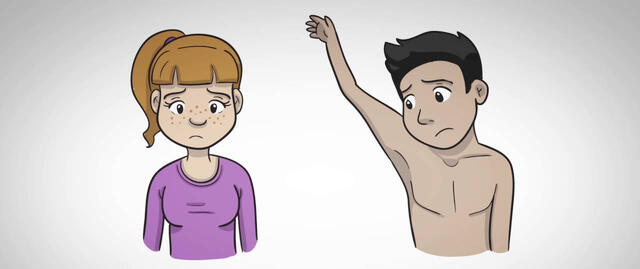
Absence of any signs of puberty by age 13 in girls and age 14 in boys is defined as Delayed Puberty. Puberty happens when the pituitary starts making more of two hormones, luteinizing hormone (called LH) and follicle-stimulating hormone (called FSH), which cause the ovaries to enlarge in girls and start producing the female hormone, estrogen and testicles in boys to grow and produce the male hormone testosterone. In girls, the sequence of events is breast bud appearance, enlargement of breast tissue, development of pubic and axillary hair, further enlargement of breasts and then menarche or first period. The growth spurt in girls starts shortly after the breasts begin to develop. The whole process occurs over 2-3 years so that a girl usually gets her first period roughly about 2-3 years after the appearance of the breast. A girl who has not started to have breast development by the age of 13 is considered to have Delayed Puberty.
Boys can start puberty at a wide range of ages, with 95% starting between the ages of 9 and 14, so we consider puberty delayed in boys when it has not started by age 14. The earliest sign of puberty in boys is enlargement of the testicles (which often goes un-noticed), followed by growth of the penis and pubic hair. The growth spurt usually starts a year or so after the genitals start to enlarge.
What causes delayed puberty in boys?
By far, the most common cause is Constitutional Delayed Puberty. These boys are generally healthy and will eventually go through puberty if given enough time. In about two thirds of cases, it is inherited from one or both parents. The mother may have had delayed puberty if she started her periods after age 14, and the father may have had delayed puberty if he started his growth spurt late (after age 16) or if he started shaving only in college. Boys with chronic illnesses often mature late. A smaller number of boys with delayed puberty have a lifelong deficiency of the puberty hormones LH and FSH, a problem we call isolated gonadotropin deficiency (IGD). This is usually a condition present from birth, and many boys with IGD are born with a penis that is smaller than it should be. Other pituitary hormones in this condition are made normally, and usually growth is normal. Failure to start puberty by age 17 is one sign a boy might have IGD. Another clue is that some boys with IGD also have a poor sense of smell, a condition referred to as Kallmann syndrome.
Finally, a few boys with delayed puberty have a problem with the testicles themselves. Because it is easy to determine the size of the testicles on a physical exam, having very small testicles or testicles that cannot be readily felt is a clue to the condition. There are several causes, including previous surgery for undescended testicles, certain inherited conditions which can cause malfunction of the testicles.
What are the signs and symptoms of delayed puberty in boys?
The key finding is that the penis and testicles do not enlarge by age 14, which is easily noted on physical exam. Often, the testicles have just started to grow but the penis is still small, which suggests that other signs of puberty will appear in the next 6-12 months. Most boys with constitutional delayed puberty are short compared with their peers, but because they have a delayed growth spurt, they usually catch up to other boys by the time they are 18 and have heights in the normal range as adults.
How is delayed puberty diagnosed?
Sometimes just the physical exam is enough, but many doctors will order some tests to confirm what they suspect and to make sure that the problem is not in the testicles. The most common tests to order are testosterone, LH, and FSH first thing in the morning, when the levels in early puberty are usually higher. Adult testosterone levels vary from 250- 800 ng/dL, and most boys with delayed puberty have testosterone levels of less than 40.
An x-ray of the hand and wrist to determine the bone age is often ordered to help predict adult height, and is typically at least 2 years behind the chronological age, which means that there is more time remaining for growth.
How is delayed puberty treated in boys?
For constitutional delayed puberty, the problem will resolve with waiting and reassurance. However, late-maturing boys are often impatient to start growing and do not want to wait another 6-18 months for the pubertal growth spurt to start naturally. Therefore, many pediatric endocrinologists may offer a brief course of testosterone to “jump-start” puberty. It is most often given in the form of a monthly injection for 3 to 6 months. When the boy is seen back after the injections, there is usually a very good gain in height and weight as well as growth of the penis and pubic hair, and puberty will, in most cases, progress without any further treatment.
When the problem is either IGD or damage to the testicles, testosterone is still the treatment of choice, but the dose will need to be increased over time and it will need to be continued well into the adult years.
What causes puberty in girls to be delayed?
Some girls with delayed puberty are simply late maturers, but once they start, puberty will progress normally. This is called constitutional delayed puberty and is more common in boys than girls. Often, this is something that is inherited from the parents, so it is more likely to occur if the mother started her periods after age 14 (the average is about 12 1⁄2) or if the father was a late maturer.
Decreased body fat is a major cause of pubertal delay in girls. It can be seen in girls who are very athletic, particularly in gymnasts, ballet dancers, and competitive swimmers. It can also be seen in girls with anorexia nervosa, who engage in extreme dieting or binging and purging, because they fear becoming too fat even when they are abnormally thin.
Finally, it can be seen in a number of chronic illnesses in which body fat is often decreased. Some girls with delayed puberty may have problems with their ovaries. The ovaries are either not developing properly or are being damaged. This is referred to as primary ovarian insufficiency. The major cause present at birth is Turner syndrome, in which all or part of one of the two X chromosomes is missing. Most girls with Turner syndrome are also extremely short for their age and may have certain distinctive physical features, such as webbing of the neck, a high-arched palate, or arms that bend outward when extended.
However, in most cases, Turner syndrome is diagnosed well before age 13 because of short stature. The major acquired cause of ovarian insufficiency is damage to the ovaries as a result of radiation, usually to treat leukemia or certain other kinds of cancer. Occasionally, girls may have their ovaries damaged by the body’s immune system.
Finally, some girls fail to start puberty because of a lack of the pituitary hormones LH and FSH, also called gonadotropins. This can occur when there are other pituitary deficiencies as well, including growth hormone, or it can be an isolated finding (particularly in a girl who is delayed but not short).
How is delayed puberty in girls diagnosed?
The endocrinologist will order blood tests to measure levels of LH, FSH, and estradiol and, in some cases, other tests. Very high levels of LH and FSH will indicate that the ovaries are not working properly, and the pituitary is trying to stimulate them to work harder. If the cause of the ovarian insufficiency is not clear, a chromosome study or karyotype will be done to see if all or some cells are missing all or part of an X chro- mosome. If the LH, FSH, and estradiol are all low, the problem could be either decreased body fat (if one of the risk factors listed above is present) or a permanent deficiency of LH and FSH. Other tests may be ordered if deficiency of multiple pituitary hormones is suspected, and on occasions, a brain MRI may be helpful. A hand x-ray for a bone age is often done, which is typically delayed by 2 or more years, which means that there is still additional time to grow.
How is delayed puberty in girls treated?
In girls with constitutional delayed puberty, breast devel- opment will eventually start on its own. Giving estrogens for 4-6 months is sometimes used to help get things started sooner. For girls with delayed puberty and decreased body fat, sometimes eating more and gaining weight will help get puberty started. For girls with primary ovarian insufficiency or a permanent deficiency of gonadotropins, long term estrogen replacement is needed and can be given either in the form of an alternate daily or daily tablet of estradiol. We usually start on a low dose and often increase the dose about every 6 months. After 12- 18 months, it is typical to start a second hormone called a progestin which will, after a few months, result in a period, usually within a day or two of stopping the progestin.